Inspection for Grease Buildup
Exhaust systems should be inspected at intervals appropriate to the cooking operation and cleaned when grease accumulation warrants it.
NFPA 96 INFORMATION & SERVICE RECORDS
NFPA 96 is a fire-safety standard for commercial cooking operations. It is not a contractor certification or a promise that a facility will pass every inspection.
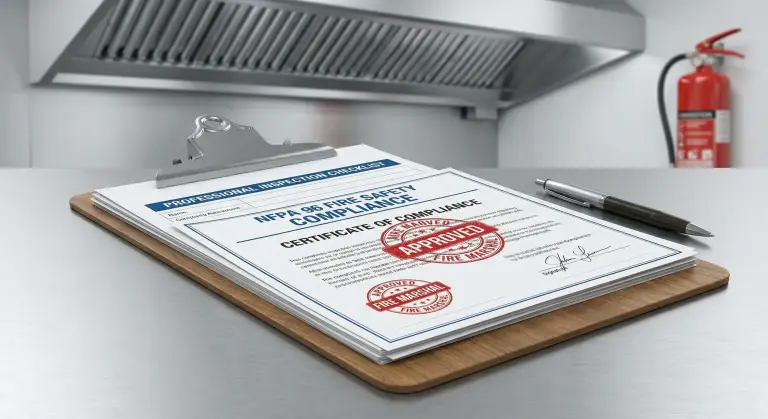
The standard addresses ventilation control and fire protection for commercial cooking operations. Exact obligations depend on the adopted code edition and the authority having jurisdiction.
Exhaust systems should be inspected at intervals appropriate to the cooking operation and cleaned when grease accumulation warrants it.
The hood, plenum, ducts, fans, and related components need suitable access for inspection, cleaning, and maintenance.
Useful records identify the provider, service date, work completed, and areas that were inaccessible or not cleaned.
Cooking volume and fuel type matter, but a fixed “monthly/quarterly/semiannual” sales chart should not replace inspection of the actual grease accumulation.
Provider name, phone number, service date, technician or crew identification, and the systems serviced.
Representative before-and-after images of the hood, accessible duct areas, fan, and roof condition.
A written list of inaccessible, damaged, unsafe, or excluded areas so the facility knows what still needs attention.
Observed repair or access needs and a proposed inspection window based on the actual cooking operation.

Ask what records and photos will be delivered, which components are included, and how inaccessible areas will be handled.
Always confirm current legal, fire-code, and insurance requirements with the responsible authority. This page is general information, not legal or code-compliance advice.
Ready when you are.